Cracks in Floors
Small cracks and openings in ground-floor construction can allow radon gas to enter a building.
Understanding Radon
Radon is a naturally occurring radioactive gas that comes from rocks and soil. You cannot see, smell or taste it, but it can enter buildings and accumulate indoors.
Understanding radon is the first step towards protecting your home, workplace and the people who use them.
Learn About Radon Testing →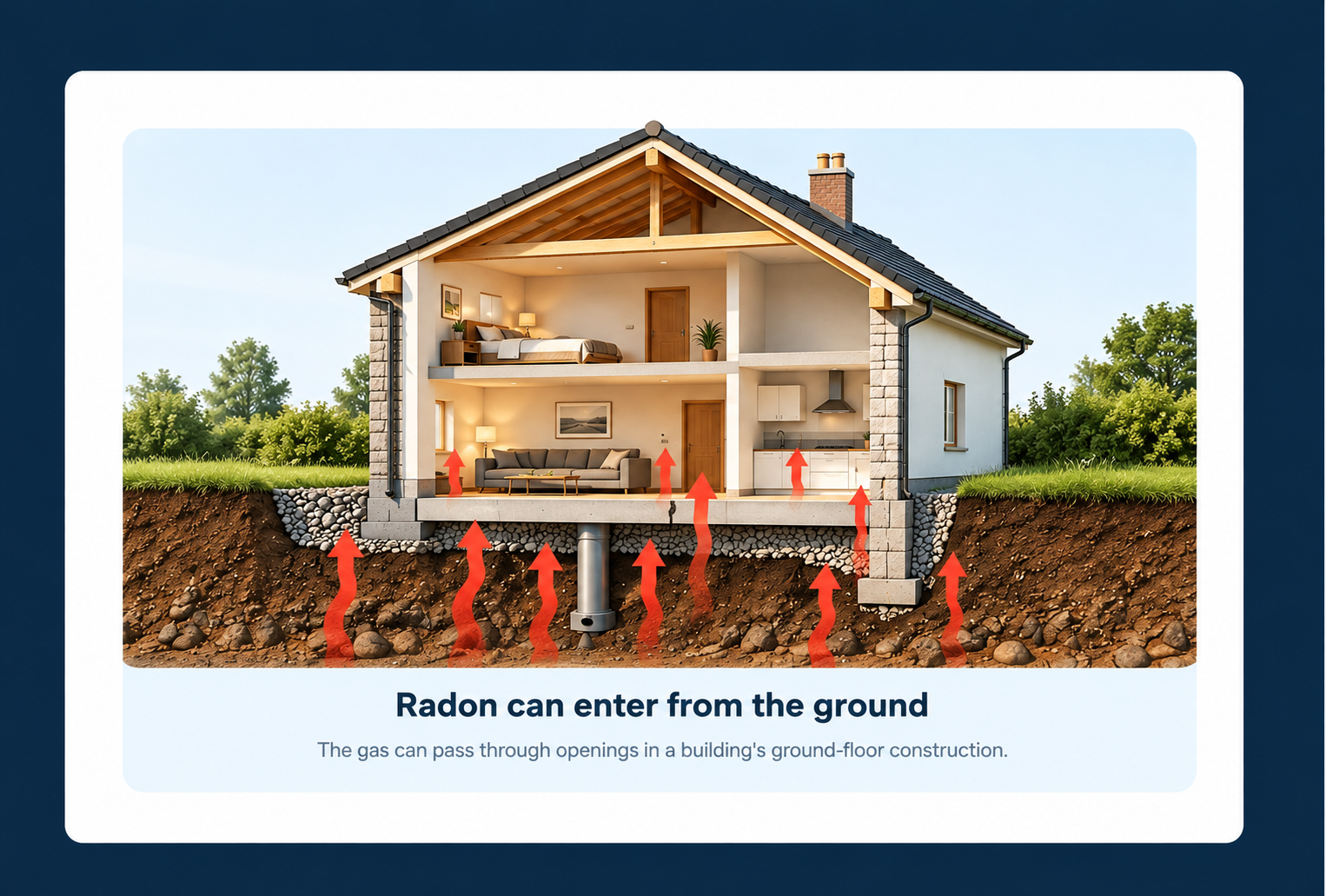
The basics
Radon forms naturally through radioactive decay in rocks and soils. Outdoors, it generally disperses into the air. Indoors, it can become trapped and reach higher concentrations.
Radon can be found in homes, offices, schools and other buildings. Its concentration depends on factors including the ground beneath the building, construction details and ventilation.
Understanding your building
Radon usually enters from the ground beneath a building. Even small openings can provide pathways for soil gas.
Small cracks and openings in ground-floor construction can allow radon gas to enter a building.
Gaps around pipes, cables and other services passing through floors can provide entry routes.
Indoor air pressure can be lower than pressure in the surrounding ground, drawing soil gas into a building.
Health and safety
Breathing radon and its radioactive decay products over time increases the risk of lung cancer. The risk depends on the radon concentration, duration of exposure and whether a person smokes.
Radon is the second leading cause of lung cancer in Ireland after smoking. The EPA estimates that around 350 lung cancer cases each year are linked to radon.
EPA estimate for Ireland
~350
Lung cancer cases linked to radon each year
Radon exposure is a long-term health risk. Testing and reducing elevated levels are practical ways to reduce that risk.
EPA Health Information ↗Testing matters
No. Radon cannot be detected by human senses and does not produce a distinctive smell or taste. You cannot determine your home's radon concentration by looking at the building or relying on a neighbour's test result.
The EPA recommends testing homes using two passive detectors, normally placed in a living room and bedroom for at least three months.
Radon concentrations are measured in becquerels per cubic metre (Bq/m³). Ireland uses reference levels to guide action on elevated exposure.
Homes
200 Bq/m³
The national reference level for homes. The EPA recommends reducing radon levels above this value.
Workplaces
300 Bq/m³
The national workplace reference level. Legal testing and remediation duties apply in specified circumstances.
These are reference levels, not boundaries between completely safe and unsafe exposure. Schools have additional advisory guidance.
Taking action
Explore the EPA's radon risk information. Remember that radon levels can vary between neighbouring properties.
Explore Radon Risk →A three-month radon test provides a reliable measurement of radon levels in your home.
Learn About Testing →Where testing identifies elevated radon, appropriate remediation measures can help reduce exposure.
Explore Remediation →For official information about radon, health risks, testing and remediation, visit the Environmental Protection Agency's radon information pages.
Visit EPA Radon Guidance ↗Dublin Radon Services can help you understand the testing process and discuss the next steps for your home or business.
Enquire About Radon Testing →